Where reliable electrical connections matter most, twist lock plugs provide a firm way to keep power connected. They must be turned into a properly rated receptacle to ensure a vibration-resistant connection. That locking action makes them a preferred choice for generators, stage equipment, and industrial machinery where an accidental unplug can create hazards.
L6-20R Wiring
Leading manufacturers like Legrand, Eaton, and Kellems offer NEMA-stamped locking devices that meet UL standards, such as UL 498. Nema Chart Twist Lock charts detail voltage and amperage ratings, distinguishing between locking “L” prefix and non-locking types. That distinction matters because using the wrong adapter, plug, or receptacle can create shock hazards.
This guide will help you in understanding Nema Chart Twist Lock charts, focusing on popular types like L5, L6, and L14 families. Subsequent sections will provide insights into the L6-20 and an L6-20 Plug Wiring Diagram. This information will allow you to plan safe installations with better understanding.
- Twist lock plugs rely on a rotate-to-lock action for secure connections.
- NEMA twist lock charts show voltage and amperage for safe selection.
- Trust recognized manufacturers like Legrand, Eaton, and Kellems and look for UL listings.
- Avoid unrated adapters; use compatible locking plugs and receptacles.
- Section topics include L6-20 connector basics and an L6-20 Plug Wiring Diagram.
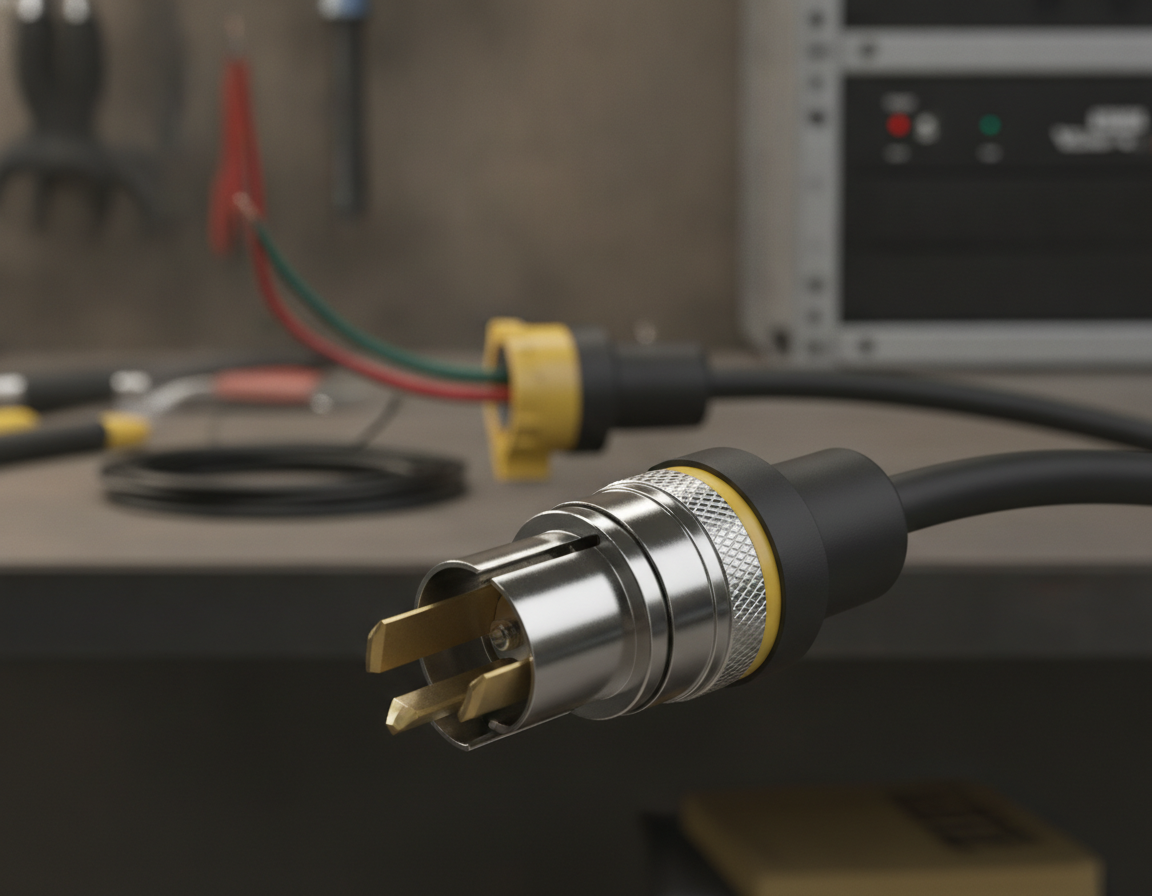
Understanding Twist Lock Plugs And Their Safety Role
Twist-lock plugs are heavy-duty electrical connectors with curved blades that turn into grooved sockets. Brands such as Hubbell and Leviton use Turnlok-style designs to create a positive mechanical lock. It creates a positive mechanical lock, resisting separation from vibration or movement.
After the plug is inserted, a short turn seats it into the locking position. The twist action places the blades into matching grooves so the electrical contact stays firm and consistent. By reducing partial withdrawal and loose fit, the design helps limit arcing, exposed conductors, and intermittent power problems.
These connectors are commonly used in construction sites, manufacturing floors, HVAC installations, and data centers. They also appear in portable generator setups, stage production rigs, medical equipment, and refrigeration systems. These environments often face cord strain, movement, or critical loads, demanding reliable power retention.
Electricians often select locking devices when equipment failure, accidental disconnection, or downtime would create serious problems. The Nema Chart Twist Lock and the L6-20 Plug Wiring Diagram support the correct matching of plugs and receptacles. Together, these references reduce the chance of mismatched voltage, incorrect amperage, or improper grounding.
Twist-lock connectors provide practical safety benefits in many work environments. By staying locked in place, they lower the risk of accidental unplugging, arcing, exposed contacts, shock, and fire hazards. Using properly rated, UL-listed components and following the L6-20 Plug Wiring Diagram supports compliance with the National Electrical Code.
| Connector Feature | Safety Value | Frequent Application |
|---|---|---|
| Curved locking-blade design | Creates secure mechanical locking to resist pullout | Temporary power, production gear, HVAC systems |
| Ground-first engagement | Supports safer connection by engaging ground first | Critical equipment and data centers |
| NEMA markings and UL listings | Identifies voltage, ampacity, and listing compliance | Commercial wiring and industrial equipment |
| Compatibility charts | Makes matching plugs and receptacles straightforward | Maintenance crews and installers |
NEMA Chart Basics For Twist Lock Connectors
Understanding NEMA configurations is essential for technicians and electricians to ensure safe connections. A Nema Chart Twist Lock or non-locking section clearly displays voltage class, amperage, and pin pattern. Reading these details correctly helps prevent unsafe pairings, equipment damage, overheating, and shock hazards.
Reading NEMA Codes And Letter Markings
A NEMA designation usually combines a configuration number, a dash, and an amperage rating. For instance, 5-15 signifies a 125V pattern with 15 amps. When the letter L appears at the front, as in L5-20P, it indicates a locking device. Letters P and R identify plug and receptacle, respectively. The charts also list common voltage classes: 125V, 250V, 277V, 125/250V, and 480V.
How NEMA Charts Separate Locking From Non-Locking Devices
NEMA charts usually divide straight-blade and locking connectors into separate sections. Examples of non-locking devices include 5-15, 6-20, and 14-30 or 14-50 configurations. Locking families such as L5, L6, and L14 are marked with an L prefix and are commonly chosen for outdoor, industrial, or vibration-prone locations. Straight-blade non-locking devices are more common in homes and light commercial work where locking retention is not required.
Chart-Reading Tips For Safer Selection
- Confirm P-to-R compatibility before connecting any device.
- Match voltage and ampacity without substitution; a L6 20 Plug must pair with the correct receptacle rated for the same voltage and amps.
- Check pin count and configuration: three-wire versus four-wire and whether two hot conductors or hot/neutral/ground are used.
- Use blade design and orientation indicators on the chart to prevent cross-connection between incompatible voltage or amperage devices.
Nema Chart Twist Lock: Popular Locking Families And Applications
In areas where cords are moved, bumped, or exposed to vibration, twist lock connectors help keep power connected. A Nema Chart Twist Lock reference quickly shows connector families, voltage ratings, amperage ratings, and practical uses. By comparing the chart before installation, users can choose the correct device and avoid mismating that may cause downtime, overheating, or unsafe operation.
The following overview compares common locking families, ratings, and suitable applications. L5 devices are commonly used on 125V circuits and are available in ratings such as 15A and 20A. Because these plugs lock into place, L5-15 and L5-20 connectors are useful for stage lighting, portable power, and equipment exposed to cord stress.
L6 types are intended for 250V single-phase circuits, ideal for motors and HVAC systems. The L6-20 and L6-30 models are robust choices for industrial machinery and refrigerated equipment, requiring higher voltages. Their locking mechanism lowers the risk of unplugging under heavy loads.
L14 connectors are four-wire 125/250V devices commonly associated with generators, transfer switches, and temporary power. With two hots, a neutral, and a ground, L14-20 and L14-30 connectors are practical for generator outputs, transfer panels, and jobsite power.
Higher-amperage locking connectors, such as the L530R and L630R receptacles, are 30A four-wire designs with distinct voltage ratings to prevent incorrect pairings. When 30A power is required, selecting the correct connector helps maintain safe operation and reduces the risk of misconnection.
Twist-lock applications can include stage production, construction sites, facility maintenance, generator hookups, and industrial equipment. For portable lighting and 125V loads, L5-15 or L5-20 may be appropriate when ratings match. For 250V motors or HVAC equipment, L6-20 and L6-30 are commonly reviewed. For generator and transfer-switch arrangements, L14-20 or L14-30 may be the correct family. For 30A four-wire service, confirm whether an L530R or L630R-style configuration matches the voltage and equipment requirement.
| NEMA Device | Voltage Rating | Amp Rating | Frequent Uses |
|---|---|---|---|
| L5-15 | 125-volt | 15-amp rating | Lighting rigs, small equipment, portable loads |
| L5-20 locking device | 125-volt | 20 amps | Portable power systems and vibration-prone equipment |
| L6-20 connector | 250V class | 20 amps | HVAC units, industrial motors, machine tools |
| L6-30 connector | 250V | 30-amp rating | Heavier machinery, larger HVAC, shop equipment |
| L14-20 locking device | 125/250V | 20A | Generator cords, small transfer panels, temporary power |
| L14-30 connector | 125/250V class | 30A | Larger generators, transfer equipment, RV shore power |
| L530R receptacle | 125V | 30A | 125V 30A circuits requiring correct locking configuration |
| L630R locking receptacle | 250V class | 30 amps | Four-wire 30A applications requiring 250V configuration |
L6-20 Plug Wiring Diagram And Key L6-20 Details
An L6-20 connector is a locking 250V, 20A device commonly used for industrial equipment, HVAC units, and similar loads. Its three-wire layout includes two hot conductors and one equipment ground. The blade configuration is intentionally different from 125V devices, helping prevent wrong connections when the Nema Chart Twist Lock is followed.
L6-20 plug and receptacle characteristics
The L6 20 Plug uses a compact, twist-lock design with two hot blades and a single pin for ground. Common construction includes brass contacts and molded thermoset or industrial-grade housings from brands such as Leviton or Hubbell. Match plug and receptacle P and R codes on a Nema Chart Twist Lock to check compatibility.
Best practices for L6-20 wiring
For a 20A circuit, 12 AWG copper is commonly used, but conductor sizing should still follow NEC requirements for conditions such as temperature rating and run length. Securely tighten terminals to the manufacturer’s recommended torque and use cord grips or strain reliefs to prevent conductor pull-out.
Confirm grounding continuity and polarity before energizing equipment. Use a calibrated multimeter and a continuity tester to verify hot-to-hot and ground connections. Label the circuit and include voltage and amperage data near the receptacle for clear identification.
Sample L6-20 plug wiring diagram notes
An L6-20 Plug Wiring Diagram should show two hot conductors and a separate equipment grounding conductor. A neutral is not part of the typical L6-20 wiring layout. Note terminal identification and torque values on the diagram for installers referencing the L6-20 Plug Wiring Diagram.
| Category | Rated Specification | Common Recommendation |
|---|---|---|
| Voltage | 250V nominal | Verify against the equipment nameplate and Nema Chart Twist Lock |
| Current rating | 20A | Confirm conductor size using NEC requirements |
| Conductor arrangement | Two hots, one ground | Do not include neutral in the standard L6-20 layout |
| Frequent applications | 250V industrial and HVAC loads | Confirm the equipment is intended for an L6 20 Plug |
| Construction materials | Conductive contacts with durable housing | Select UL-listed devices from trusted makers |
| Final checks | Continuity testing and torque verification | Check all terminations before applying power |
Detailed Look At L6 20 Plug, L6-20 Receptacle, And L6-20R Wiring
Understanding the components and steps involved in a dependable connection is key to avoiding failures on job sites. This section breaks down the anatomy of each part, outlines the installation process for an L6-20R receptacle, and highlights essential inspection and testing points. It’s vital to use NEMA-marked, UL-listed parts from reputable manufacturers like Legrand, Eaton, and Kellems for optimal performance.
Component Anatomy And Materials
Housings are available in impact-resistant plastic and metal, ensuring durability in harsh environments. The curved blades and robust contacts provide a secure connection with minimal wear. Cord grips and strain relief reduce stress on internal terminations and help prevent conductor pullout.
Many contacts use nickel, silver, or similar plating to reduce resistance and improve durability. Available styles may include weatherproof, flush-mount, surface-mount, and industrial designs for different environments. Brands like Legrand and Eaton provide detailed specifications and UL listings for each model.
Installing And Wiring An L6-20R Receptacle
Always turn off the power at the breaker before starting any work. Ensure the box is mounted correctly using the appropriate hardware for the surface. The enclosure should suit the installation environment.
Conductors should be stripped only to the length specified in the device instructions. Terminal screws should be tightened to the listed torque value in the manufacturer’s documentation. Use the correct cord grips and secure the cable to prevent strain relief issues.
Label the circuit and verify that the breaker size matches the ampacity of the L6 20 Plug and the branch circuit. For permanent installations or higher-power work, follow the NEC and use a licensed electrician where required.
Post-Installation Inspection And Testing
Check the continuity of hot and neutral conductors with a multimeter before energizing. Where suitable equipment is available, insulation resistance testing can help identify shorts, damaged insulation, or moisture paths.
Verify grounding by measuring resistance to a known good ground. Confirm blade engagement by inserting a matching L6 20 Plug and observing a snug, locking fit.
During reinspection, use the manufacturer’s torque values and applicable UL guidance. If a device fails testing, shows heat damage, or has damaged terminals, replace it rather than attempting unsafe field repair.
| Item | Recommended Practice | Purpose |
|---|---|---|
| L6-20 plug diagram | Follow manufacturer wiring diagram exactly and use color-coded conductors (hot-hot-ground) | Prevents miswiring and ensures correct phase relationship for 250V circuits |
| L6-20 Receptacle mounting | Use rated enclosures, screws, and weather seals as required | Protects the device from weather and reduces strain on terminations |
| L6-20R testing steps | Check continuity, insulation condition, and ground path | Confirms safe operation and compliance with NEC and UL guidance |
| Terminal connections | Torque terminals correctly and use ferrules where stranded conductors require them | Reduces heat buildup and prevents loosening over time |
| Part selection | Choose UL-listed parts from Legrand, Eaton, or Kellems | Reduces the risk of counterfeit or under-rated components |
Safety Warnings And Common Twist Lock Installation Errors
Most field failures stem from small errors in selection and installation. Reading the NEMA markings and applicable wiring rules is essential before connecting equipment. A correct Nema Chart Twist Lock reading helps prevent plug and receptacle mismatches, which can cause shock or overheating. If unsure, always consult a licensed electrician before proceeding.
The Risks Of Twist Lock Adapters
Twist lock adapters may look handy but often fail to fully seat or lock. A loose or incomplete connection can increase resistance, create heat, and lead to damaged contacts.
Some twist-lock adapters are not UL-listed or may not truly match the amperage they advertise. Established manufacturers such as Hubbell and Legrand generally emphasize properly matched devices rather than improvised field adapters. Using an unlisted adapter can increase the risk of melting and fire.
Common Installation Mistakes
Two of the most common mistakes are mismatching voltage and amperage ratings. Plugging a 20A load into a 15A circuit may overheat conductors and devices.
Incorrect conductor size and loose terminal screws are also common causes of failure. A poor termination or a backstabbed conductor can create a hot spot that can char insulation.
Another frequent error is failing to match plug (P) to receptacle (R) NEMA codes. Mixing NEMA families, modifying blades, or ignoring the Nema Chart Twist Lock can create dangerous and non-compliant setups.
Regulatory And Professional Guidance
The National Electrical Code governs branch-circuit wiring and device ratings. Use the NEC sections that apply to receptacles, cord-connected equipment, grounding, and overcurrent protection. Use UL-listed components and NEMA-stamped devices.
For L6-20R Wiring or other locking receptacle installations, a licensed electrician should complete or inspect the work. Depending on the location, the authority having jurisdiction may require permits, inspections, or both.
Important safety warnings: never use makeshift adapters, never exceed rated amperage, and always verify torque and continuity after installation.
Selecting Twist Lock Connectors And Reliable Suppliers
Choosing the right twist lock gear involves matching NEMA codes to the equipment’s voltage, amperage, and wire count. The installation environment also matters, especially whether the device will be indoors, outdoors, wet, dusty, or exposed to vibration. Weatherproofing and vibration resistance are key factors. Also, check the cord length, strain relief, and terminal materials before making a purchase.
Twist Lock Selection Checklist
The following checklist can help narrow the options before purchase or installation. Confirm that the NEMA marking, UL listing, and equipment requirement all match. For equipment needing a 240V or 250V, 20A locking connection, compare the device against an L6-20 Plug Wiring Diagram. For wet, salty, coastal, or corrosive locations, choose materials and housings designed to resist corrosion.
- Confirm NEMA code and configuration against a Nema Chart Twist Lock.
- Verify voltage, amperage, and wire count compatibility.
- Choose weatherproof or indoor-rated housings as needed.
- Check strain relief, cord rating, and terminal material.
- Cross-check with an L6-20 Plug Wiring Diagram when selecting L6 20 Plug and L6-20 Receptacle parts.
Trusted Brands And Certifications
Stick with established manufacturers like Legrand, Eaton, and Hubbell for reliable components. A genuine device should show clear NEMA identification and appropriate UL listing information. Genuine parts offer peace of mind and meet inspection standards better than unverified alternatives.
| Supplier Brand | Common Strength | Typical Certifications |
|---|---|---|
| Legrand electrical | Broad connector selection and rugged housings | UL listing and NEMA markings |
| Eaton electrical | Industrial-grade connectors and durable designs | UL listing and CSA where applicable |
| Hubbell wiring devices | Weatherproof options, robust designs | UL listed, NEMA stamping |
Where To Buy Twist Lock Products
Purchase twist-lock devices from authorized electrical distributors or verified online suppliers to reduce the risk of counterfeit parts. Installation Parts Supply offers a wide selection of connectors with detailed product information. Use manufacturer catalogs and NEMA charts to verify compatibility before purchasing.
- Compare product specs to a Nema Chart Twist Lock entry.
- Confirm UL listing and manufacturer warranty.
- Purchase from an authorized dealer or known distributor.
Twist Lock Safety Conclusion
For planning, troubleshooting, or verifying an installation, the Nema Chart Twist Lock should be a primary reference. Ensure that an L6 20 Plug only connects to its correct receptacle by matching the exact NEMA locking configuration. Always verify voltage, amperage, and pin layout against official charts to prevent miswiring and mismatched equipment.
For L6-20 work, a proper L6-20 Plug Wiring Diagram and correct L6-20R Wiring practices are essential. In industrial and commercial environments, locking connectors help prevent accidental disconnection and downtime. They are vital where vibration or heavy use is prevalent. Avoid jury-rigged adapters, modified connectors, or uncertified parts because they can compromise electrical safety.
For consistent performance, choose UL-listed and NEMA-stamped devices from trusted suppliers or authorized distributors. For permanent or high-power installations, hire a licensed electrician and follow the National Electrical Code. Proper planning, correct parts, and professional installation support systems are safe and reliable.